


Gratitude Is a Practice, Not a Feeling
As Thanksgiving approaches, many of us pause to count our blessings.
At Inspire Nurse Leaders®, we have been reflecting on something a little different this season: gratitude is not just something we feel when things go well. It is something we do, on purpose, especially when things are hard.
Nurse leaders know this better than anyone. You lead through staffing gaps, rising acuity, and constant change. In those moments, gratitude can feel like a luxury. Yet the research tells us the opposite. Intentionally noticing what is going well is one of the simplest, most evidence-based ways to protect our well-being and the well-being of the teams we lead.
That is why our theme this season is being intentional. We think of gratitude as a “happy behavior”: a small, repeatable action that builds resilience over time, regardless of what the day brings.
Gratitude does not require a good day. It requires a decision to look for the good within the day you had.
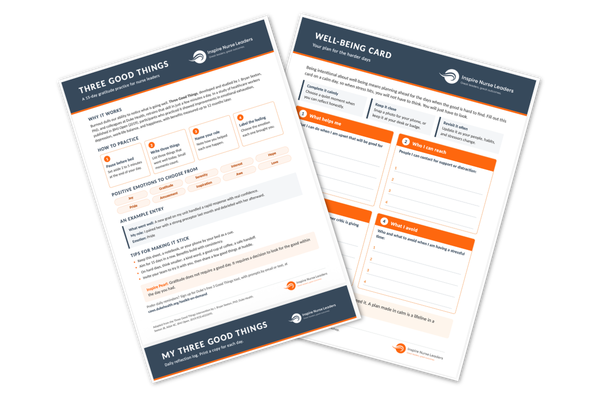
Two Practical Tools for Well-Being
Put gratitude into practice and prepare for challenging days.
What We Are Grateful for This Year
In the spirit of practicing what we teach, here are three good things from our year at Inspire Nurse Leaders:
- Our team, and seven years of doing this work together. As we move through our seventh year, we are deeply thankful for the consultants, coaches, and staff who make Inspire Nurse Leaders what it is. Every engagement reflects their expertise, their heart, and their belief that great nursing leadership changes lives. Seven years in, that belief is stronger than ever.
- The thousands of leaders we have reached this year. This year alone, we have had the privilege of supporting thousands of leaders through workshops, coaching, and team development. Each one of them carries that growth back to their teams, their patients, and their organizations. That ripple effect is what keeps us going.
- Supporting those who care for the most vulnerable. Some of our most meaningful work this year has been alongside leaders and nurses who care for children with cognitive, mental, and physical health needs, and alongside hospice teams who walk with patients and families through the end of life. These caregivers give extraordinary compassion every day, often in emotionally demanding settings. Supporting their well-being, so they can keep showing up for others, is an honor we do not take lightly.
Name it to keep it. Gratitude grows when we put it into words, whether written, spoken, or shared with a colleague.
Tips For Achieving and Maintaining Well-Being
Well-being is not a destination. It is a set of daily choices that add up. These pearls reflect what we see working for leaders across the country.
Start with yourself
Leaders set the emotional tone for their teams. When you are depleted, it shows, and it spreads. Protecting your own well-being is not selfish; it is a leadership responsibility.
You cannot pour from an empty cup. Schedule recovery the way you schedule meetings: on the calendar, and non-negotiable.
Get support for the journey
Even the strongest leaders need a thinking partner. Coaching creates space to reflect, recalibrate, and lead with intention instead of reaction.
Reflection is not a pause in leadership. It is where better leadership begins.
Build a culture where gratitude is shared
Well-being is contagious. Teams that regularly name what is going well build trust, morale, and the resilience to weather hard seasons together.
Start your next huddle with one win. It takes 60 seconds and changes the tone of the whole shift.
Pick the tool that meets you where you are. Feeling depleted? Try Self-Compassion. Feeling disconnected? Try Gratitude or Kindness.
Try It This Season: Three Good Things
One of our favorite well-being tools is also one of the simplest. Three Good Things, developed and studied by Dr. J. Bryan Sexton and colleagues at the Duke Center for Healthcare Safety and Quality, asks you to write down three things that went well each evening and your role in them.
In a pilot study published in BMJ Open, healthcare workers who practiced Three Good Things reported improvements in emotional exhaustion, depression, work-life balance, and happiness, with benefits measured up to 12 months later. Sexton recommends trying it for about two weeks. It takes just a few minutes before bed.
To help you get started, we created a free Three Good Things worksheet (PDF) with simple instructions, a daily log, and a 15-day tracker. Try it yourself or invite your team to participate!
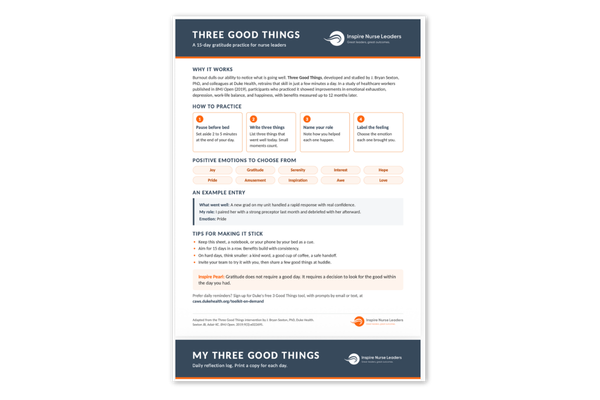
Small, consistent actions beat big, occasional ones. Three good things a night is enough to start rewiring how you see your day.
For The Harder Days: Your Well-Being Card
Gratitude helps us notice the good. But being intentional also means planning ahead for the days when the good is hard to find. That is where our Well-Being Card comes in, an activity from our Leading Well-Being workshop.
On one simple page, you will list:
- What you can do when you are upset that will be good for you
- People you can contact for support or distraction
- Positive things to say to yourself when your inner critic is loud
- Who and what to avoid during a stressful time
Fill it out on a calm day, then keep it somewhere you will see it: your badge, your desk, or your phone. When stress hits, you will not have to think. You will just have to look.
Well-Being Card
Put gratitude into practice and prepare for challenging days.
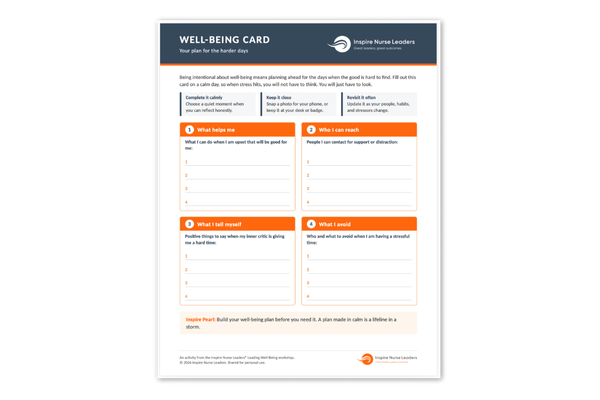
Build your well-being plan before you need it. A plan made in calm is a lifeline in a storm.
Let's Lead Well Together
If you are ready to make well-being an intentional part of how you lead, we would love to help. Explore our Leading Well-Being workshop, coaching for leaders, and team culture support, or reach out to start a conversation.
From all of us at Inspire Nurse Leaders®, thank you for the care you give and the leadership you bring. We are grateful for you.
Sources
- Sexton JB, Adair KC. Forty-five good things: a prospective pilot study of the Three Good Things well-being intervention. BMJ Open, 2019.
- Duke Center for the Advancement of Well-being Science. Well-Being Toolkit of On-Demand Resources.
- Duke Today. One Easy Step Toward Building Resilience, 2018.